
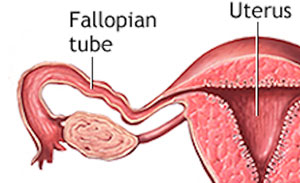
Recently accumulated evidence has strongly indicated that the fallopian tube is the site of origin for the majority of high-grade serous ovarian cancer (HGSC) or peritoneal carcinomas.
Accumulated data implicate the fimbria as a site of origin and descriptive molecular pathology and experimental evidence strongly support a serous carcinogenic sequence in the Fallopian tube. Both direct and indirect (‘surrogate’) precursors suggest that the benign tube undergoes important biological changes after menopause, acquiring abnormalities in gene expression that are often shared with malignancy, including PAX2, ALDH1, LEF1, RCN1, RUNX2, beta-catenin, EZH2, and others. In women with a genetic predisposition for ovarian cancer, lesions in the fallopian tubes closely resemble ovarian high-grade serous carcinomas.
 Ovarian cancer is the fifth leading cause of cancer deaths among women. The overall survival rate for women with epithelial ovarian cancer hasn’t improved in the past 50 years.
The more aggressive epithelial ovarian carcinomas represent 75% of all cases of ovarian cancer and are responsible for 90% of deaths due to ovarian cancer. Screening is ineffective.
Prophylactic salpingectomy may offer clinicians the opportunity to prevent ovarian cancer in their patients.
In women at high risk of ovarian cancer, for example those who carry the BRCA 1 mutation – removal of the ovaries and fallopian tubes offer great risk reduction for ovarian cancer and breast cancer.
For other women at usual risk of ovarian cancer, opportunistic removal of the fallopian tubes during surgery carries minimal additional surgical risk to the patient and may reduce risk of developing ovarian cancer.
National guidelines for removal of the fallopian tubes should be considered for low-risk women who have completed their families, at the time of other gynaecological or abdominal surgery, to reduce the incidence of ovarian cancer.
The surgeon and patient should discuss the potential benefits of the removal of the fallopian tubes during a hysterectomy. When counselling women about laparoscopic sterilization methods – bilateral salpingectomy can be considered a method that provides effective contraception.
Randomized controlled trials are needed to support the validity of this approach to reduce the incidence of ovarian cancer